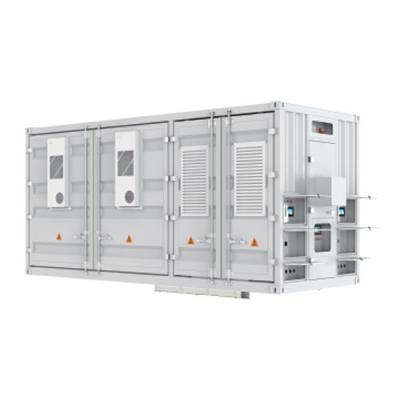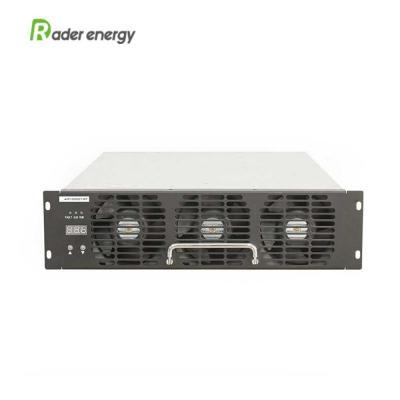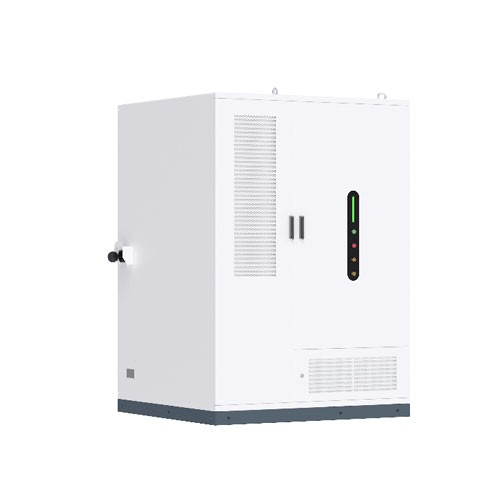
Power	50-100kW
Display	7 "touch screen
Installation	Ground-Mounted(Sequential)
Equipment size	/
Input voltage range	AC380V±15%
Output current range	0-250A
Output voltage range	DC300V-1000V
IP rating	IP54
Working Temp	-25-55℃ Installation
protocol
Network selection	Ethernet, 3G, 4G
Protect
Waterproof, lightning protection
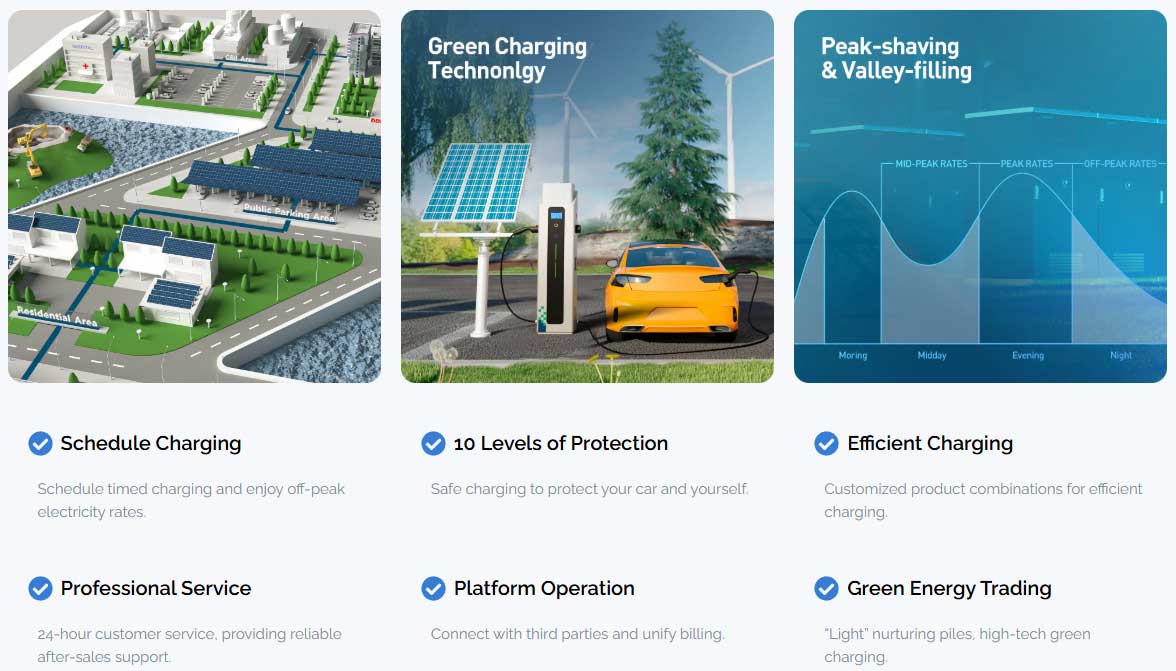
The adoption of electric vehicles (EVs) is accelerating globally, driven by ambitious targets such as China’s "New Energy Vehicle Industry Development Plan" and projected increases in EV adoption rates across Europe. As EVs become a significant part of the automotive market, integrating EV charging with renewable energy sources—such as solar PV—has emerged as a key trend in sustainable transportation solutions.
Why EV Charging Stations Need Energy Storage
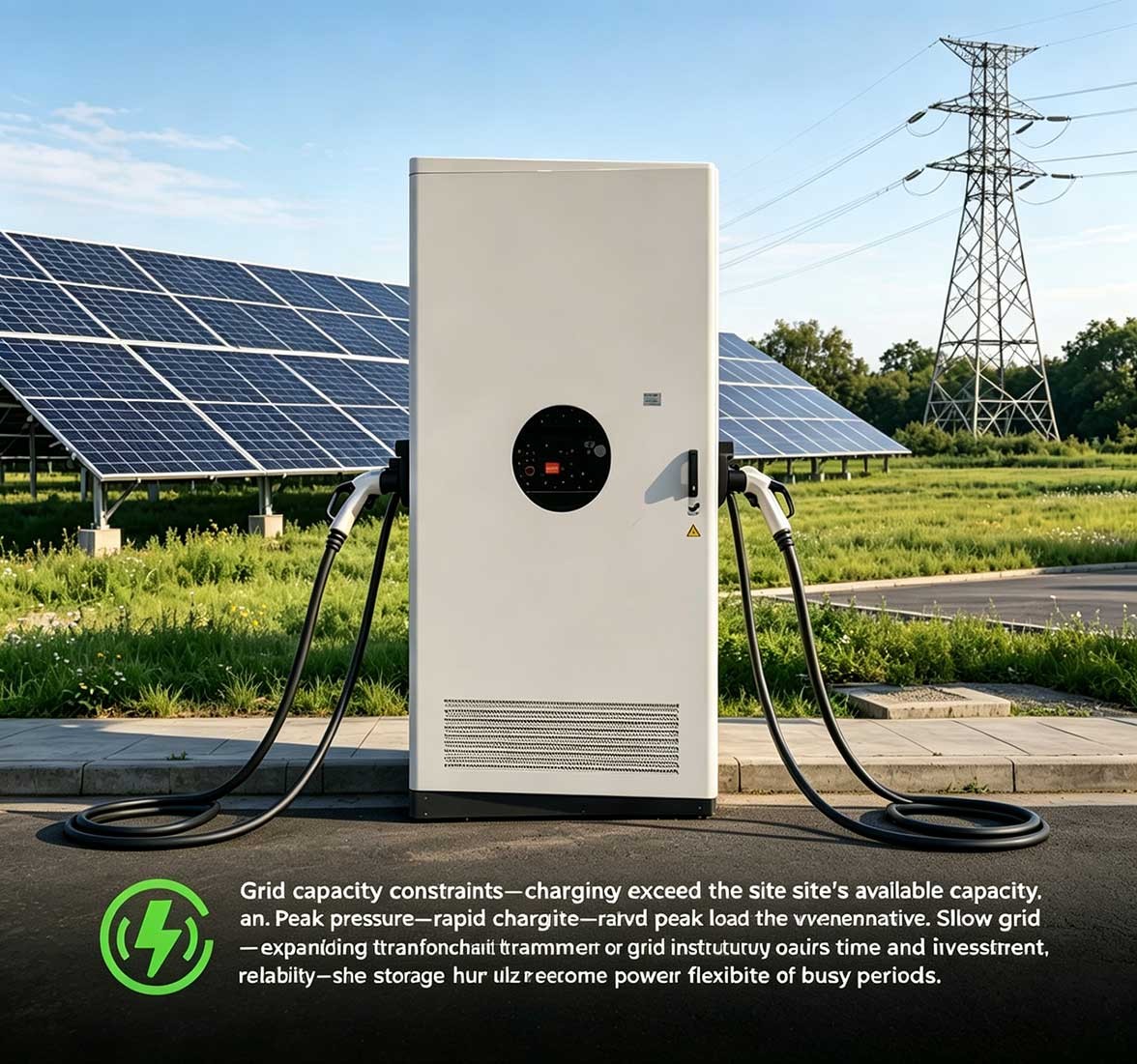
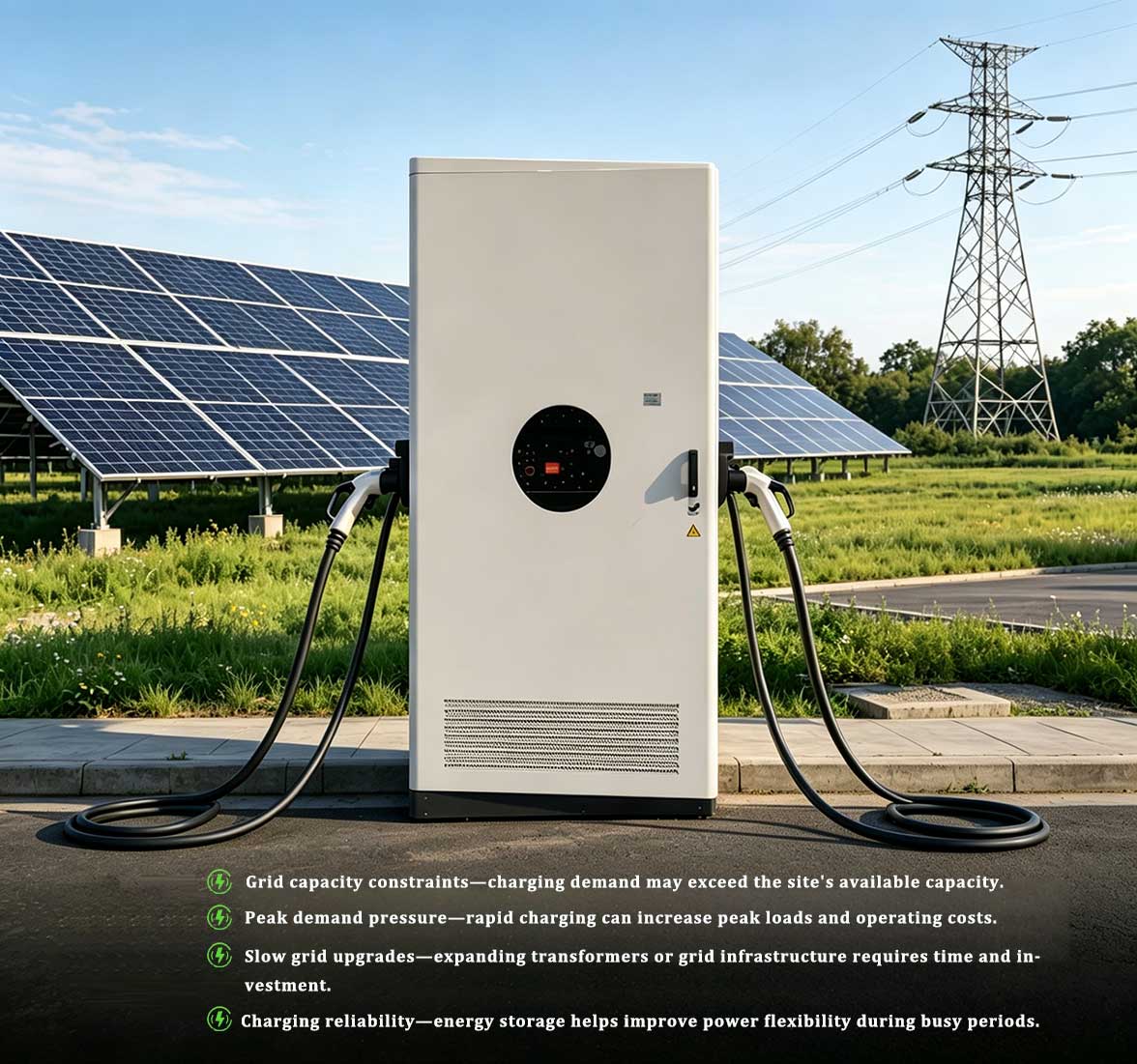
High-power EV charging creates significant peak demand, especially when multiple vehicles charge simultaneously. For many charging stations, factors such as transformer capacity, grid connection limits, peak demand charges, or slow grid upgrades can constrain the expansion of charging facilities. Battery energy storage helps stations buffer peak power, enhances energy flexibility, and supports more reliable EV charging operations.
Grid capacity constraints—charging demand may exceed the site's available capacity.
Peak demand pressure—rapid charging can increase peak loads and operating costs.
Slow grid upgrades—expanding transformers or grid infrastructure requires time and investment.
Charging reliability—energy storage helps improve power flexibility during busy periods.
Supporting EV Charging at Grid-Constrained Sites
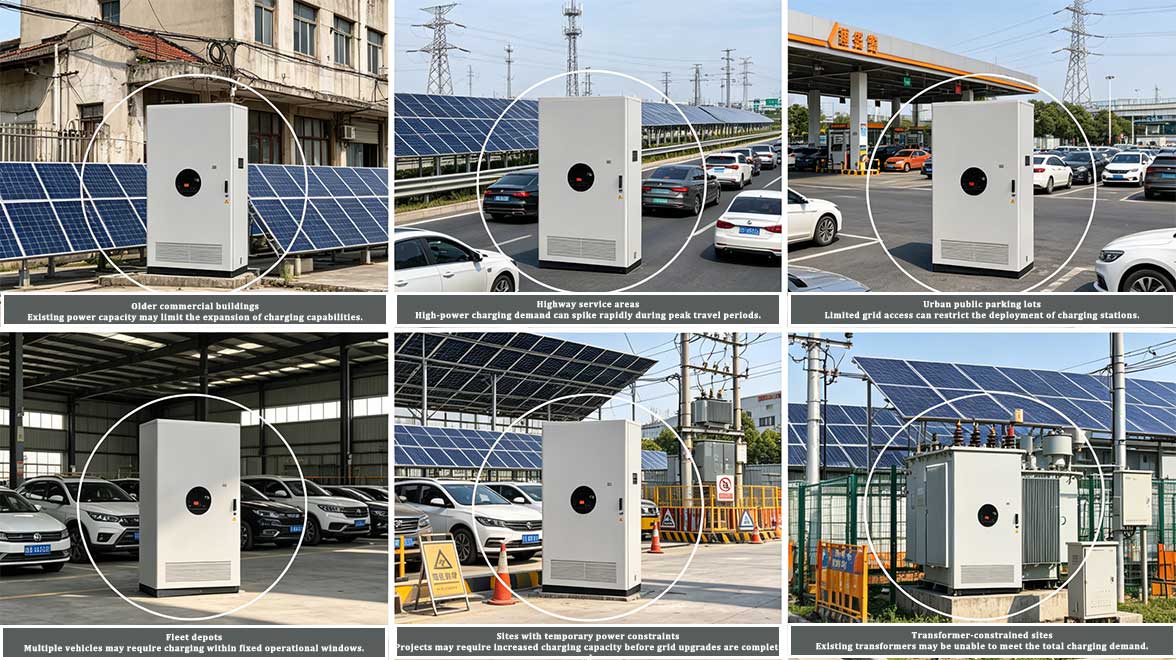
Not all charging stations possess the grid capacity to meet high-power EV charging demands from the outset. Energy Storage System (ESS)-assisted charging enables stations to deploy greater charging capacity without relying entirely on immediate grid upgrades. By combining battery storage, smart power control, and DC fast-charging technologies, Gridisyslink helps operators improve charging services in power-constrained areas.
How Battery Energy Storage Supports EV Fast Charging
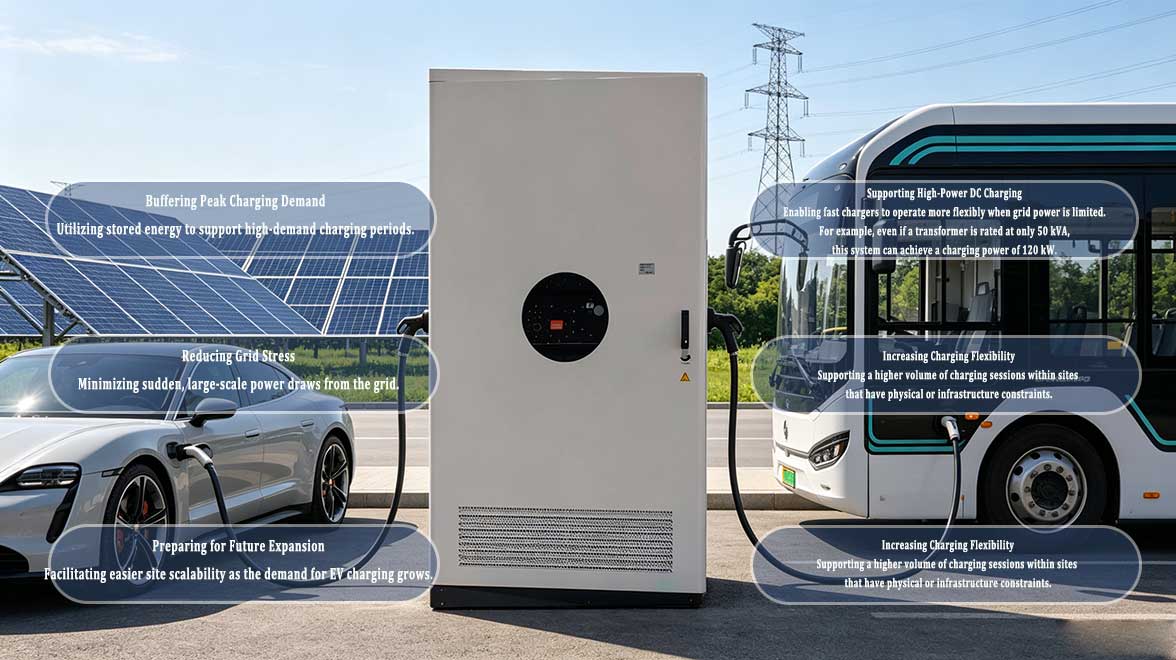
Energy storage systems can charge from the grid or solar PV arrays when power is abundant and discharge during peak demand periods to support EV charging. This helps reduce instantaneous grid load, accelerates charging speeds, and boosts charging capacity in areas with limited grid power supply.
Buffering Peak Charging Demand
Utilizing stored energy to support high-demand charging periods.
Supporting High-Power DC Charging
Enabling fast chargers to operate more flexibly when grid power is limited. For example, even if a transformer is rated at only 50 kVA, this system can achieve a charging power of 120 kW.
Reducing Grid Stress
Minimizing sudden, large-scale power draws from the grid.
Increasing Charging Flexibility
Supporting a higher volume of charging sessions within sites that have physical or infrastructure constraints.
Preparing for Future Expansion
Facilitating easier site scalability as the demand for EV charging grows.
What Are the Advantages of Combining Solar Power with EV Chargers?
Lowering EV Charging Costs
Battery energy storage allows users to schedule charging during times when electricity rates are lower or supply is more abundant, thereby reducing EV charging costs. By storing energy when rates are low and using it during high-rate peak periods, users can achieve significant savings on electricity bills. This strategy not only cuts costs but also maximizes the value of each charge. Integrating solar, storage, and charging solutions enables efficient energy management and allows users to leverage solar power for both their homes and EVs, leading to further cost reductions. This smart energy management approach optimizes energy usage, decreases reliance on the grid, and improves overall cost-efficiency.
Reducing Demand Charges
In addition to billing based on kilowatt-hours (kWh), utility companies often charge fees based on peak power demand (kW). Battery energy storage systems help lower these demand charges through peak shaving—storing electricity during off-peak periods and discharging it during EV charging sessions. This practice significantly reduces the total cost of EV charging, particularly during DC fast charging.
Enhancing Reliability and Resilience
Battery energy storage systems provide backup power to charging stations during outages or grid interruptions, ensuring that EVs can continue charging even when the grid is unavailable. The figure below illustrates the differences in EV charging scenarios with and without battery energy storage systems, highlighting improvements in reliability and resilience.
**Increasing Renewable Energy Utilization**
Battery energy storage systems can store surplus renewable energy generated from solar or wind sources and discharge it to power EV charging stations when needed. This capability promotes broader renewable energy adoption, thereby reducing reliance on fossil fuels. Using renewable energy and storage technology for EV charging helps lower greenhouse gas emissions and enhances the overall sustainability of the transportation sector.
**Choosing an EV Charger: Why Gridisyslink is the Ideal Choice**
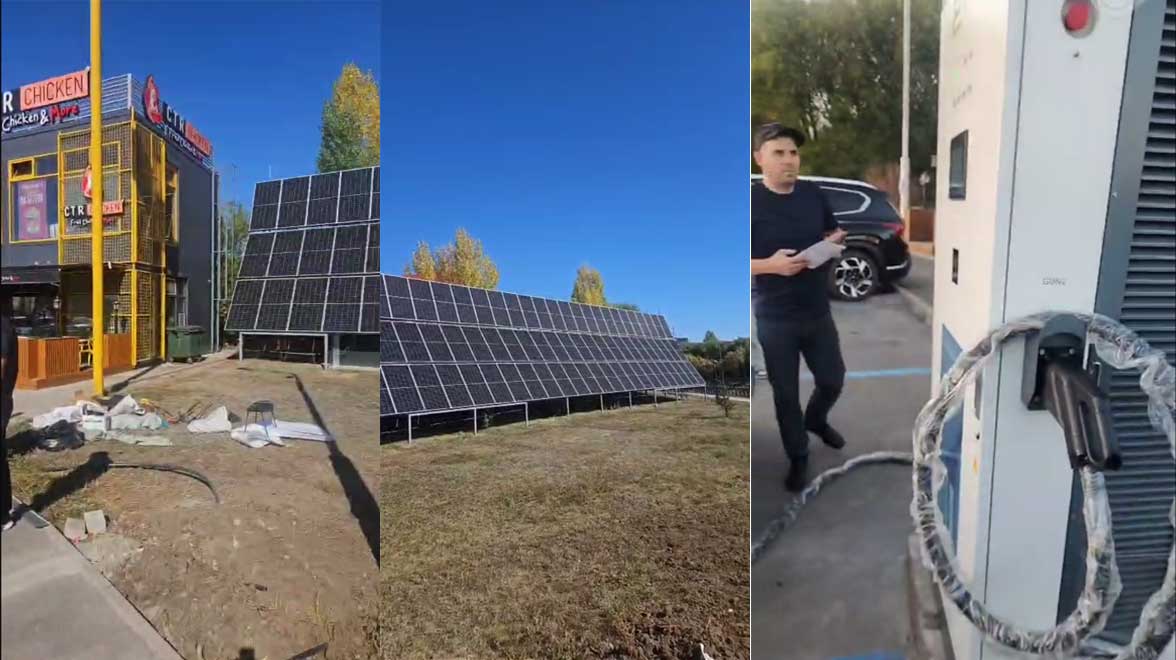
Gridisyslink EV chargers perfectly exemplify the synergy between photovoltaic (PV) energy and electric mobility. This DC fast-charging solution integrates a 261 kWh energy storage system and supports 120 kW fast charging. With an IP54 protection rating, it is suitable for both indoor and outdoor installation, meeting the needs of commercial and public charging scenarios.
**Automatic Charge/Discharge Mode Switching:**
Equipped with a built-in Energy Management System (EMS), the unit flexibly adjusts operations based on battery state-of-charge (SoC) and charging demands to maximize PV energy utilization. For instance, it can draw power from the grid during early morning or late evening hours when solar angles are low, while prioritizing PV-generated power during the day when solar output is high; this strategy avoids charging during periods of high grid electricity prices, thereby reducing operating costs. Gridisyslink chargers feature intelligent control capabilities that make them particularly well-suited for regions and countries with unstable power grids.
**Enhancing User Experience:**
Many energy storage and EV charger suppliers develop companion software to make the charging process faster and more convenient. This directly impacts the user's first impression and long-term ease of use. Gridisyslink charging stations support the international OCPP standard protocol, enabling operators to efficiently manage the units and seamlessly integrate them into their management platforms for streamlined operations.
**Conclusion**
Combining EV chargers with energy storage systems enhances efficiency and flexibility. Users can store electricity generated during off-peak hours or from renewable sources like solar panels, thereby lowering charging costs and reducing reliance on the grid during peak demand periods. This configuration ensures reliable charging even during power outages and promotes sustainability by integrating renewable energy into daily EV use, thereby helping to build a cleaner energy ecosystem.
Success Stories
Choosing between single-phase and three-phase po
"Revolutionizing energy storage, advancements in
Here is an introduction to one of the best batte
Contact: Thomas
Phone: +8618025306280
Tel: +86-0755-32872175
Email: hello@Gridisyslink.com
Add: Block A, Ketujia Building, Fucheng Street, Longhua District, Shenzhen, PRC





 English